
History of Horseradish
When people think about horseradish, they think about more than just the flavor. In fact, it is likely remembered more for the head rush from the heat than anything else. It’s unmistakable and unique heat that can wake up anyone’s senses. But did you know that horseradish also has a deep, global history rooted in tradition, medicine, and food culture? Let’s take a closer look at how this root with a bite became a household staple worldwide.
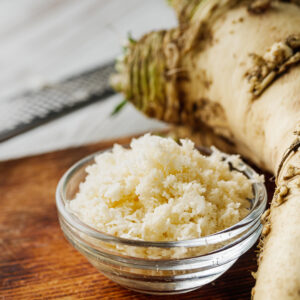 Ancient Origins: Horseradish Before It Hits The Plate
Native to Eastern Europe and Western Asia, this pungent root has quite a history. The plant itself is a thick, pale, and knobby hardy root. The potency was discovered long before it was used in cooking. Initially, it was used by Egyptians, Greeks, and Romans for medicinal purposes, including relief of respiratory symptoms, stimulation of digestion, and antimicrobial properties. The root’s sharp aroma is recognizable the second it’s cut or crushed.
First Culinary Uses: European Food Culture
Once the Middle Ages rolled around, horseradish started to spread across Europe. It quickly became a staple in German, Austrian, Polish, and Jewish cuisines due to its compatibility with meat, fish, and most root vegetables. In the very early days, it also had a strong association with religious meals such as the Passover Seder and Eastern European Christian Easter meals.
Coming to America: From Garden to Condiment Staple
European settlers brought horseradish to America, where it was quickly embraced and widely grown. The hardy root thrived in American soil, particularly throughout the Midwest, where growing conditions proved ideal. For many years, horseradish was cultivated in home gardens and prepared fresh as needed. Over time, it transitioned into a commercially prepared condiment, making its way into grocery stores and onto tables across the country. Not long after, horseradish became closely associated with hearty, classic American dishes, often served alongside meats, seafood, and other comfort-driven favorites.
What Gives Horseradish Its Signature Heat?
Simply put: cutting or grating this hearty root unlocks a volatile compound. These compounds travel up through the nasal passages, which creates that sharp, sinus-clearing burn you know and love. It’s intense, but fades quickly. This is in sharp contrast to pepper heat, which is a mouth-based burn that lingers. It’s important to note that horseradish is best enjoyed immediately, as the heat dissipates after it’s grated. Atomic Horseradish uses this to our advantage, wasting no time between processing and bottling.
Horseradish Today: A Bold Tradition Ensues
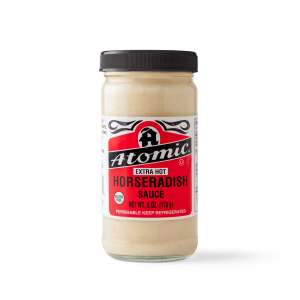
As decades passed, horseradish remained a staple for households across America, Europe, and beyond. Modern uses have evolved into iconic applications, such as shrimp cocktail sauce, pungent marinades, sandwich spreads, and even beloved Bloody Marys. The bold legacy was honed in with Morehouse Atomic — the ideal horseradish for people who really love a punch to their taste buds.
Pick up Morehouse Atomic Horseradish at grocery stores near you to experience horseradish in its boldest form. Taste the Morehouse difference: honoring tradition while delivering unmistakable heat.